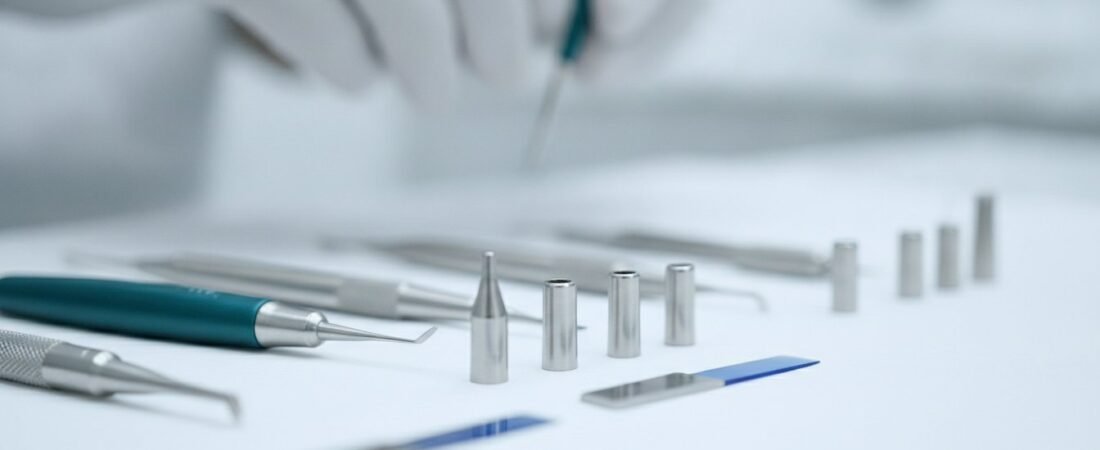
A single micron of deviation in a surgical punch is often the hidden difference between a thriving graft and a permanent transection. In a global market where Follicular Unit Extraction (FUE) now accounts for 80% of all procedures, the technical integrity of your hair transplant instrument set isn’t just a matter of preference; it’s the foundation of your clinical ROI. You likely understand that even the most skilled surgeon is limited by tool dullness or inconsistent manufacturing quality that leads to hand fatigue during a ten-hour session.
This guide provides a professional reference for the precise tools required to meet 2026 surgical standards. You’ll learn how to evaluate a hair transplant instrument set for long-term durability and autoclavability, ensuring your clinic aligns with the latest ISO 13485:2016 quality frameworks. We’ll preview the essential components from sapphire blades to high-torque micromotors, helping you standardize protocols across your surgical teams for maximum graft survival.
Key Takeaways
- Learn how a standardized hair transplant instrument set optimizes clinical workflows and reduces surgical time through streamlined protocols.
- Understand the critical role of FUE punch sizing and sapphire blade precision in achieving high-density graft placement and minimizing tissue trauma.
- Identify the material science behind titanium and stainless steel instruments to balance long-term durability with surgeon comfort during extended procedures.
- Discover how technique-specific tools, such as DHI implanter pens, dictate nearly half of your toolkit’s composition and operational success.
- Verify manufacturing excellence by sourcing from ISO 13485 certified facilities in global restoration hubs like Istanbul to ensure clinical-grade reliability.
Defining the Core Components of a Professional Hair Transplant Instrument Set
A surgical-grade hair transplant instrument set in 2026 is defined by its adherence to ISO 13485:2016 standards and its modular design. It isn’t merely a collection of sharp edges. It’s a high-performance system where every component, from the extraction punch to the implantation pen, is engineered for biological compatibility and mechanical precision. Standardizing your clinic’s surgical kits eliminates the variability that leads to graft trauma. When every technician works with identical, high-quality tools, the surgical rhythm becomes predictable. This consistency speeds up the procedure and reduces the time grafts spend outside the body, which is a critical factor in survival rates.
Modern clinics are moving away from general kits. Instead, they utilize technique-specific configurations tailored to Hair transplantation techniques like FUE or DHI. A professional hair transplant instrument set is categorized into three functional phases: extraction, site creation, and implantation. Each phase requires a different metallurgical profile and ergonomic balance to maintain surgeon precision over several hours.
Extraction Essentials: Beyond the Micromotor
The extraction phase relies heavily on the quality of the FUE punch. These tools must maintain a razor-sharp edge to prevent “burring” or donor area scarring. High-performance FUE punches are the cornerstone of this stage. Surgeons often choose between manual handles for tactile feedback or motorized micromotors for high-volume efficiency. Donor area management also requires precise templates and marking tools to ensure even harvesting and avoid over-depletion of the donor zone.
Graft Handling and Placement Tools
Once extracted, grafts enter a vulnerable state. Specialized surgical forceps are required for delicate manipulation; using general surgery forceps can easily crush the follicular bulb. A complete hair transplant instrument set includes various forceps designs, such as angled or straight tips, specifically calibrated for different graft sizes. Maintaining viability is equally dependent on the environment. Professional sets incorporate:
- Petri dishes and graft chilling devices: These maintain a stable temperature to slow metabolic decay while grafts await implantation.
- Magnification requirements: High-resolution surgical loupes or stereo microscopes are mandatory. They allow technicians to inspect graft integrity and sort them by hair count with absolute accuracy.
Without these precision handling tools, even the most successful extraction phase can result in poor clinical outcomes. The transition from extraction to handling must be seamless, requiring tools that are balanced for weight and grip to prevent technician fatigue.
Technical Specifications: FUE Punches and Sapphire Blades in the Modern Toolkit
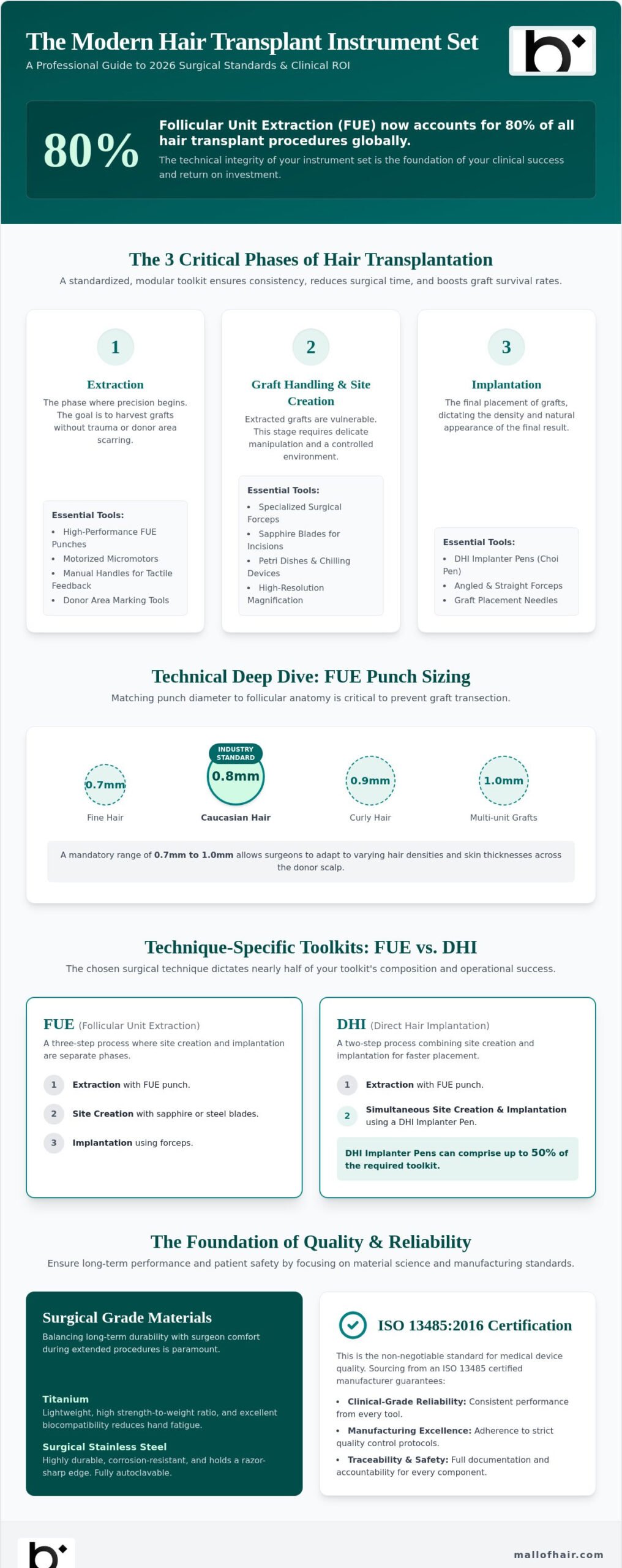
Precision in a professional hair transplant instrument set is measured in tenths of a millimeter. The extraction phase’s success depends on matching the instrument’s diameter to the patient’s specific follicular anatomy. A comprehensive review of FUE systems indicates that a toolkit lacking a diverse size range inevitably increases the risk of graft transection. For most clinical applications, a mandatory range of 0.7mm to 1.0mm allows the surgeon to adapt to varying hair densities and skin thicknesses across the donor scalp. This technical adaptability is a core requirement for clinics aligning with the ISO 13485:2016 quality framework.
Selecting FUE Punch Sizes for Different Hair Types
The 0.8mm FUE punch remains the industry standard for Caucasian hair, providing an optimal balance between graft integrity and donor site healing. However, multi-unit grafts or patients with curly hair often require 0.9mm or 1.0mm options to accommodate the wider follicular spread. The ideal edge geometry for a 0.8mm FUE punch features a tapered, ultra-thin wall design with a razor-honed bevel to minimize friction and prevent follicular twisting. Explore our technical range of FUE punches to ensure your team has the exact dimensions required for every case.
Choosing between sharp and blunt punch extraction strategies is a tactical decision based on tissue resistance. Sharp punches offer cleaner incisions and faster extraction speeds, while blunt punches are often preferred in cases where the follicular direction is unpredictable, as they push the follicle away from the edge rather than cutting it. This choice directly impacts the overall survival rate within the hair transplant instrument set’s performance metrics. Most high-volume clinics keep both variations in their standard kits to handle diverse patient demographics.
Sapphire Blades: Precision in Site Creation
By 2026, sapphire blades have surpassed traditional steel as the standard for creating high-density recipient sites. Their crystalline structure allows for a significantly sharper edge, resulting in smaller, cleaner incisions that promote faster tissue recovery. Surgeons must choose between V-shaped tips for precise depth control or U-shaped tips for wider graft entry points. Maintaining blade integrity is paramount; a sapphire blade must retain its sharpness throughout a multi-thousand graft session without microscopic chipping. This durability ensures that the last incision is as clean as the first, reducing the risk of post-operative scarring. If you need assistance selecting the correct metallurgy for your clinic, you can consult with our technical specialists for tailored recommendations.
Ergonomics and Material Science: Why Surgical Grade Matters
The physical composition of a hair transplant instrument set dictates both surgical outcome and the longevity of the clinical investment. While many providers focus on initial sharpness, the metallurgical properties of the tools determine how they perform after fifty autoclave cycles. Surgical-grade materials are essential for maintaining the mechanical tolerances described in the U.S. Patent for a hair transplantation system. Using substandard alloys in a professional hair transplant instrument set leads to microscopic pitting and corrosion, which can harbor pathogens and compromise the sterile field.
Stainless steel, specifically 316L, remains the industry baseline due to its corrosion resistance and cost-effectiveness. However, titanium is increasingly preferred for manual handles and forceps. It offers a 40% reduction in weight compared to steel, which is critical during procedures lasting eight hours or more. This weight reduction directly correlates with surgeon precision; a lighter tool reduces the micro-tremors caused by muscle fatigue. High-performance clinics prioritize these materials to ensure tool resilience and patient safety.
Metallurgy in Hair Restoration
Clinical success is often influenced by the friction coefficient of the extraction tools. Gold-coated punches provide superior biocompatibility and a smoother entry into the scalp tissue compared to uncoated steel. This coating reduces the “stick-slip” effect during rotation, which helps in maintaining the integrity of the follicular unit. For a deeper look at sourcing these specific components, see this FUE Punch Manufacturer: The Ultimate Guide to Sourcing Surgical Precision (2026). Titanium Nitride (TiN) is another popular coating, valued for its extreme hardness and ability to maintain a sharp edge through thousands of penetrations.
Ergonomic Handle Design
Ergonomics in a hair transplant instrument set aren’t a luxury; they’re a preventative measure against occupational injuries. High-volume technicians are at significant risk for Carpal Tunnel Syndrome and repetitive strain injuries. Handles must feature knurled grips to ensure slip-resistance, especially in fields where blood and saline are present.
Balanced weight distribution is equally vital. A handle that’s “top-heavy” requires the surgeon to apply more grip force to maintain control, leading to rapid exhaustion. Professional-grade sets utilize hollow-core handles or tapered designs to shift the center of gravity toward the palm. This design allows for more fluid, intuitive movements during both the extraction and implantation phases. Ensuring your tools are ergonomically sound protects your most valuable asset: the surgical team’s dexterity.
Customizing Your Set: DHI vs. FUE Operational Requirements
The choice between Follicular Unit Extraction (FUE) and Direct Hair Implantation (DHI) dictates roughly 40% of the total hair transplant instrument set composition. While the extraction phase remains largely consistent across both methods, the implantation phase requires vastly different mechanical approaches. FUE relies on a two-step process of site creation followed by graft placement, whereas DHI combines these into a single motion using specialized tools. Equipping a clinic for both methodologies requires a hybrid inventory management strategy to ensure every surgical team has access to the correct metallurgical standards. It isn’t enough to simply buy a generic kit; you must align your hardware with your clinical technique.
The DHI Instrument Ecosystem
The DHI Implanter Pen is the defining component of this methodology. These pens allow for the simultaneous creation of the recipient site and implantation of the graft, which significantly reduces the time follicles spend outside the scalp. A professional hair transplant instrument set for DHI must include a variety of needle sizes to accommodate different graft thicknesses. Loading forceps in a DHI kit are distinct from standard extraction forceps. They feature ultra-fine, non-crushing tips designed specifically to slide the graft into the implanter needle without mechanical trauma. Proficiency with this specific toolkit requires dedicated technician training to master the loading rhythm and needle replacement protocols.
The Traditional FUE Site-Creation Kit
In contrast, a standard FUE kit prioritizes incision precision and manual placement dexterity. This setup focuses on sapphire blades for site creation, followed by the use of specialized graft placement forceps. These forceps often come with straight or angled tips, allowing technicians to navigate different areas of the scalp with ergonomic ease. Unlike the DHI pen, which handles the graft within a needle, FUE forceps require the technician to have a direct, tactile connection with the tissue. Browse our complete Hair Transplant Instrument Catalog to see the full range of technique-specific configurations available for modern clinics.
Transitioning between these methods requires a deep understanding of tool synergy. Many high-performance clinics now maintain hybrid sets to offer patients the most suitable technique for their hair type. If you’re looking to build a customized kit for your facility, contact our product specialists today to discuss your specific operational needs and ensure your sets meet ISO 13485:2016 standards.
Strategic Sourcing: Partnering with an ISO 13485 Certified Manufacturer
Sourcing a hair transplant instrument set requires more than comparing catalog prices. On February 2, 2026, the FDA’s Quality Management System Regulation (QMSR) officially replaced older standards, making ISO 13485:2016 the mandatory framework for medical device quality systems. This regulatory shift means that for a clinic to maintain international standing and safety compliance, every tool must originate from a certified facility. Partnering with a manufacturer that adheres to these global standards ensures your surgical hardware isn’t just sharp; it’s legally compliant and clinically validated for high-performance environments.
Istanbul has solidified its position as the primary global hub for hair restoration, performing an estimated 25-35% of all procedures worldwide as of 2025. This concentration of clinical activity has driven unprecedented manufacturing excellence in the region. Sourcing directly from Istanbul-based manufacturers allows clinics to bypass the inconsistencies of retail middle-markets while gaining access to tools tested in the world’s most demanding surgical theaters. It’s a strategic move that secures both quality and supply chain reliability.
Quality Assurance in Medical Manufacturing
Reliability in a professional hair transplant instrument set depends on rigorous batch testing and material traceability. Non-certified tools often lack documented metallurgical history, meaning the composition of a punch or blade could vary between orders. ISO 13485 certification guarantees that every instrument undergoes strict dimensional accuracy checks and sharpness audits. This process prevents the clinical failures associated with dull edges or brittle alloys that might fail during high-temperature autoclave cycles. Using non-certified tools isn’t just a risk to the graft; it’s a risk to the clinic’s reputation.
Beyond the Tools: Training and Support
Precision hardware is only as effective as the technician’s dexterity. Leading manufacturers now offer integrated partnerships that combine high-performance tools with professional education. The Aesthetic Academy provides a dedicated pathway for surgical teams to master specific instruments, such as DHI pens and micromotors, in a controlled setting. For a deeper understanding of how these programs elevate clinical standards, see this Aesthetic Academy Hair Transplant: A Comprehensive Guide.
Managing a growing clinic’s inventory requires a shift from sporadic retail purchasing to wholesale strategic sourcing. Establishing a direct relationship with an ISO-certified manufacturer ensures consistent access to specialized FUE punches and complete hair transplant instrument sets. Beyond the products, these partnerships provide global export logistics and technical support that standard vendors can’t match. This alignment is the final, essential step in ensuring long-term clinical excellence and predictable surgical outcomes.
Standardizing Clinical Excellence for Future Growth
Achieving superior graft survival rates requires a shift from generic surgical kits toward a precision-engineered hair transplant instrument set. As global regulations now prioritize ISO 13485:2016 compliance, the technical integrity of your tools directly dictates your clinic’s operational success. Whether you’re optimizing for high-density FUE sessions or the rapid rhythm of DHI, the metallurgy and ergonomics of your instruments must match your team’s surgical expertise. Investing in premium Istanbul-based production isn’t just a purchase; it’s a commitment to durability and patient safety that sets your practice apart in a competitive market.
Mall of Hair stands as an ISO 13485 certified manufacturer, delivering surgical-grade excellence used by leading restoration clinics worldwide. Our Istanbul-based facility ensures that every punch, blade, and implanter pen meets the highest industrial standards for sharpness and resilience. We invite you to Explore Professional Hair Transplant Instrument Sets at Mall of Hair to see how our technical expertise can support your clinic’s high-performance goals. Elevate your surgical protocols with tools designed for precision and built for long-term clinical reliability.
Frequently Asked Questions
What are the essential tools in a basic hair transplant instrument set?
A professional set must include FUE punches for extraction, sapphire blades for recipient site creation, and specialized graft handling forceps. For clinics utilizing direct implantation methods, DHI implanter pens are also mandatory. These components form the core of a high-performance hair transplant instrument set, ensuring precision across every phase of the procedure.
How many FUE punches does a surgeon need for a single procedure?
Surgeons typically utilize two to three FUE punches per procedure to ensure peak sharpness is maintained throughout the entire session. Even premium surgical steel or gold-coated punches experience microscopic dulling after several hundred extractions. Rotating to a fresh punch during a large session prevents increased tissue resistance and minimizes the risk of graft transection.
What is the difference between titanium and stainless steel hair transplant tools?
Titanium instruments offer a 40% reduction in weight compared to stainless steel, which is critical for reducing surgeon hand fatigue during eight-hour procedures. Stainless steel remains the preferred material for cutting edges due to its superior rigidity and cost-effectiveness. Most clinical-grade sets combine both: titanium for manual handles and stainless steel for the active cutting components.
Can sapphire blades be reused or are they single-use only?
Sapphire blades are durable enough for repeated sterilization, but many leading clinics treat them as single-patient instruments to guarantee maximum sharpness. While the crystalline structure resists dulling better than steel, microscopic nicks can occur over time. Using a new blade for each patient ensures the cleanest possible incisions and promotes faster post-operative healing.
Why is ISO 13485 certification important for hair transplant equipment?
ISO 13485 certification ensures that the manufacturer follows a rigorous quality management system, providing full traceability and safety for every medical device. Following the 2026 FDA QMSR regulatory updates, this certification is the global benchmark for clinical safety. It guarantees that your instruments meet the high standards required for modern surgical environments.
How do I maintain the sharpness of my surgical forceps and punches?
Maintaining sharpness requires avoiding direct tip-to-tip contact during cleaning and utilizing specialized enzymatic detergents. You shouldn’t toss delicate punches or forceps into a shared tray. Using protective silicone mats within your hair transplant instrument set sterilization trays prevents the honed edges from hitting hard surfaces and sustaining damage.
What is the best way to sterilize a professional hair transplant kit?
Autoclaving via pressure-saturated steam is the most effective method for sterilizing surgical-grade instruments. Most professional tools require exposure to 134°C for a minimum of five minutes in a vacuum-assisted cycle. It’s vital to check the manufacturer’s specific temperature limits, particularly for sapphire blades and micromotor components, to avoid compromising the material integrity.
Should I buy a pre-made instrument set or customize my own?
Customizing your own set is usually the superior choice because it allows you to align your hardware with your specific surgical technique and patient volume. While pre-made kits offer a convenient starting point, a customized set ensures you have the exact punch diameters and blade geometries required for your clinic’s unique operational needs and surgeon preferences.