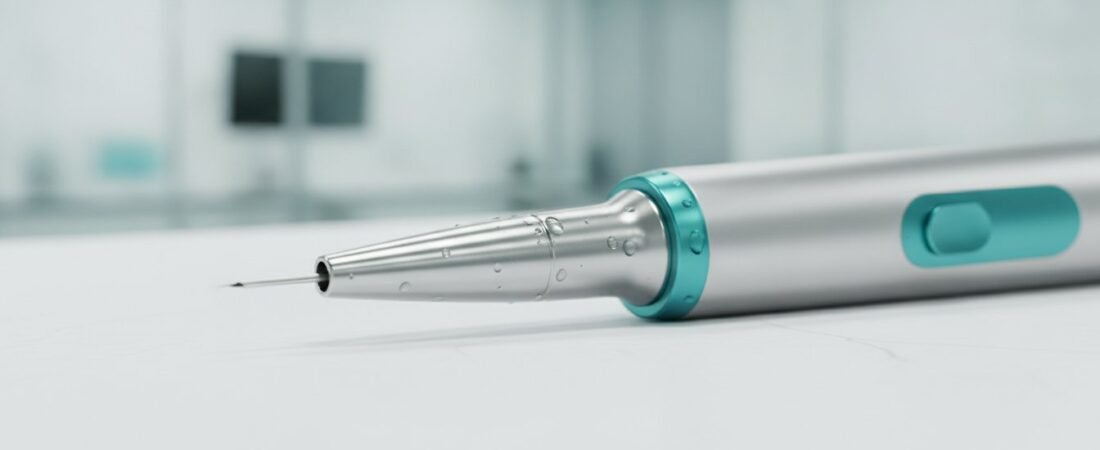
The difference between a successful hair transplant and a failed investment often comes down to a few millimeters of medical-grade steel. For surgeons, the struggle with surgical fatigue and the pressure to maintain high graft survival rates during grueling procedures is a constant reality. It’s frustrating to see density fall short of patient expectations due to mechanical trauma during placement. Using a high-quality implanter isn’t just about convenience; it’s a strategic choice to protect the biological integrity of every follicle.
You likely recognize that consistent, high-density results require more than just skill. They require equipment that meets rigorous international standards like ISO 13485:2016. This technical guide explores the mechanisms and clinical advantages of medical-grade implanters in modern DHI procedures. You’ll discover how specific selection criteria and technical precision lead to faster surgical turnarounds and superior patient outcomes. We’ll break down the engineering behind these tools to help you achieve the professional standards your clinic demands.
Key Takeaways
- Understand the technical mechanism of combining micro-channel creation and graft placement into a single, fluid motion.
- Learn how a medical-grade implanter utilizes “non-touch” physics to protect the hair bulb and significantly improve follicle survival rates.
- Evaluate the clinical advantages of DHI pens over traditional forceps, focusing on reduced tissue trauma and faster patient healing.
- Identify the essential material requirements and ISO 13485 quality standards necessary for professional-grade hair restoration tools.
- Discover how precision engineering reduces surgical fatigue while ensuring consistent, high-density results across long procedures.
What is an Implanter? Defining the Surgical Tool in Hair Restoration
In the context of modern hair restoration, an implanter is a high-precision surgical instrument designed to streamline the placement of hair follicles. While digital search results often confuse this term with industrial ion implantation used in semiconductor manufacturing, the medical version serves a strictly biological purpose. It’s a specialized pen-like device that allows a surgeon to load a follicular unit and insert it into the recipient site in one fluid motion. This tool is the defining element of Direct Hair Implantation (DHI). It marks a departure from traditional techniques where the creation of recipient sites and the placement of grafts were two separate, often traumatic, steps.
The device is frequently called the Choi Pen. This name pays tribute to the researchers at Kyungpook National University who developed the original prototype. In professional medical circles, “implanter” and “Choi Pen” are synonymous. This technology evolved as a natural progression of Follicular Unit Extraction (FUE). While FUE improved how we harvest grafts, the implanter perfected how we plant them. It replaced the need for pre-made incisions, which often led to excessive bleeding and unpredictable graft angles.
The Core Function of Surgical Implanters
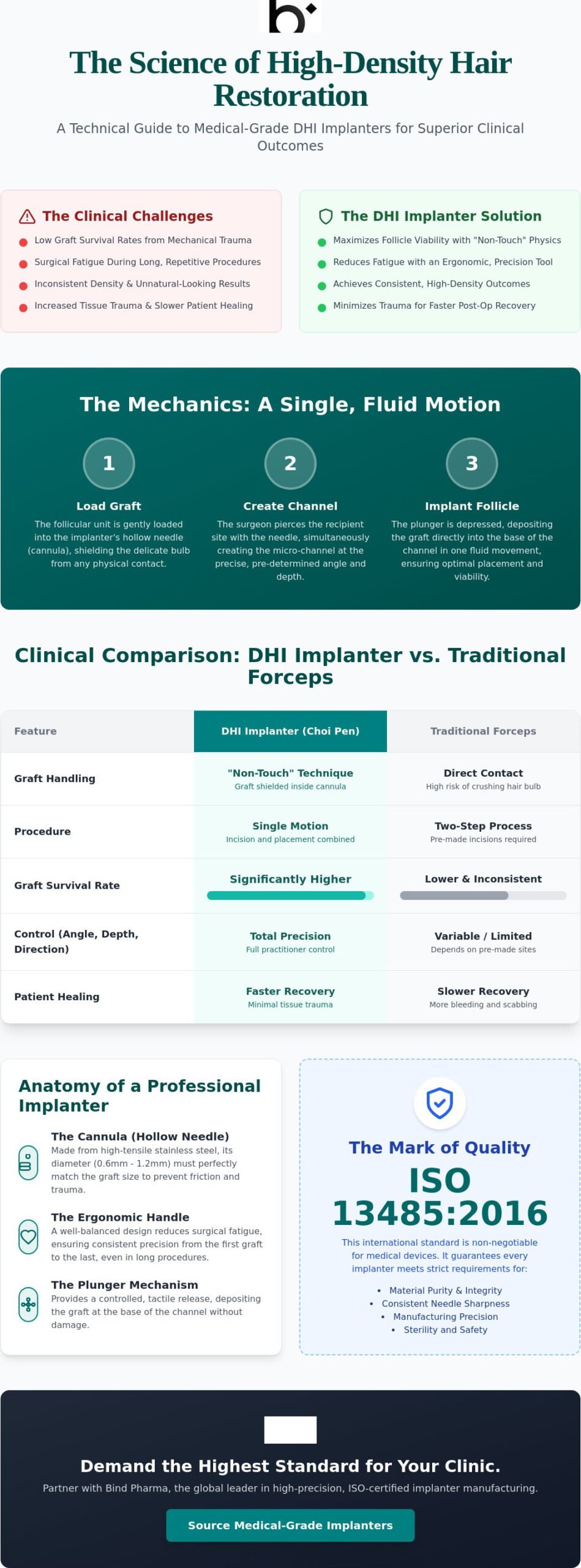
The primary objective of any surgical implanter is to maximize graft viability by minimizing physical contact. Every time a follicle is manipulated with traditional forceps, there’s a risk of crushing the delicate hair bulb. This mechanical trauma is a leading cause of low survival rates. The implanter solves this by shielding the graft within a protective cannula. It gives the practitioner total control over the depth, angle, and direction of the hair. This level of precision is non-negotiable when trying to achieve the high densities required for natural-looking results. By merging the incision and placement phases, the tool also significantly reduces the “out-of-body” time for follicles. Speed is essential. The faster a graft is returned to a blood-supplied environment, the higher its chances of thriving.
Key Components of a Professional Implanter Pen
A professional-grade device is an assembly of high-performance components. Each part must meet strict manufacturing standards to ensure surgical success. These include:
- The Cannula: This is a medical-grade hollow needle, usually made from high-tensile stainless steel. Its diameter must match the graft size exactly to prevent friction.
- The Plunger: A precision-engineered mechanism that provides a controlled, tactile release. It ensures the graft is deposited at the base of the micro-channel without being crushed.
- The Ergonomic Handle: Designed for stability during long procedures. A well-balanced handle reduces surgical fatigue, which is vital for maintaining consistency from the first graft to the last.
The Mechanics of DHI Implanter Pens: Protecting Graft Viability
The mechanical efficiency of a DHI implanter lies in its ability to perform two critical surgical steps simultaneously. In traditional methods, the surgeon creates a recipient site and then a technician inserts the graft using forceps. This double-handling increases the risk of follicle trauma. With an implanter, the needle creates the micro-channel and the plunger deposits the follicle in a single, controlled motion. This “non-touch” physics is vital. By housing the graft within the cannula, the tool ensures the hair bulb never makes direct contact with surgical instruments or the patient’s skin during insertion.
Needle diameter selection is a technical decision based on the graft’s morphology. Standard sizes range from 0.6mm to 1.2mm. Smaller 0.6mm needles are typically reserved for single-hair follicles used in hairline restoration to achieve maximum naturalness. Larger 1.0mm or 1.2mm needles accommodate multi-hair follicular units. Precision in these diameters is paramount; even a 0.1mm discrepancy can lead to graft friction or excessive tissue trauma. Sharpness is equally critical. A medical-grade needle must pierce the scalp with minimal resistance to reduce postoperative scabbing and speed up the healing process. Manufacturing these tools requires strict adherence to ISO 13485:2016 standards to guarantee consistent sharpness and structural integrity across every unit.
Graft Loading Procedures
Loading the follicle into the cannula is a high-stakes task performed by the surgical technician. They must slide the graft into the hollow needle without damaging the root or the sebaceous gland. This requires a steady hand and a rhythmic workflow. In a professional setting, multiple pens are rotated to keep the surgeon moving at a steady pace. Utilizing a high-performance DHI Implanter Pen allows for a more fluid exchange between the technician and the surgeon, maintaining a sterile chain and reducing the time follicles spend outside the body.
Pressure and Depth Control
A common challenge in high-density packing is “popping,” where the insertion of one graft causes a neighboring one to extrude. Mechanical plungers on professional implanters provide the tactile feedback needed to avoid this. Surgeons can adjust the plunger to match the specific scalp thickness of the patient, ensuring the bulb is placed exactly at the dermal papilla level. This depth control prevents both shallow placement, which leads to poor growth, and deep placement, which can cause folliculitis or pitting. Proper calibration of the device ensures that every follicle is secured at the optimal vascular depth for long-term survival.
Implanter Pens vs. Traditional Forceps: A Clinical Comparison
The clinical superiority of the surgical implanter becomes evident when analyzing long-term patient data and follicle viability. Traditional hair restoration methods rely on a two-step process: creating recipient channels with a blade and then inserting grafts with forceps. This approach often subjects the follicle to excessive mechanical pressure. One of the primary Factors affecting graft survival is the intensity and duration of graft handling. Implanter pens mitigate this risk by providing a protective housing for the follicle during the entire insertion phase. This leads to higher survival rates, particularly in cases involving fragile or thin grafts.
Patient recovery times also differ significantly between these methods. Forceps placement requires larger pre-made incisions to allow for the tool’s width. These larger slits cause more bleeding and longer scabbing periods. In contrast, the micro-incisions made by an implanter needle are precise and minimally invasive. This technical accuracy allows clinicians to achieve densities between 40 and 60 grafts per cm² without compromising the local blood supply. While the learning curve for a surgical team is steeper than traditional FUE, the ability to pack grafts tightly while maintaining a natural appearance is a major competitive advantage for modern clinics.
Surgical Efficiency and Speed
In high-volume sessions exceeding 3,000 grafts, surgical fatigue is a critical factor that can degrade results. The DHI workflow utilizes a tool rotation system where technicians load multiple pens while the surgeon focuses solely on placement. This synchronization standardizes the depth and angle of every graft, regardless of how long the procedure lasts. It removes the variability often seen in forceps methods, where different technicians might apply varying levels of pressure. A disciplined team using a high-quality implanter can maintain peak performance throughout a full day of surgery.
Patient Outcomes and Aesthetics
Precision in hair growth direction is the most visible benefit of the pen method. Surgeons can adjust the angle of the needle with degree-level accuracy to mimic the patient’s natural hair flow. This is especially vital for the hairline and crown areas where growth patterns are complex. Furthermore, the reduction in post-operative inflammation is substantial. Because the tool creates a perfect-fit channel for the graft, there is less “dead space” around the follicle. This leads to less swelling, reduced redness, and a faster return to daily activities for the patient.
Sourcing Medical-Grade Implanters: Quality Standards and ISO 13485
The regulatory landscape for surgical instruments has shifted toward global harmonization. As of February 2, 2026, the FDA’s Quality Management System Regulation (QMSR) fully incorporates ISO 13485:2016 as the primary standard for medical device manufacturing. For a clinic, sourcing a surgical implanter that meets these criteria is a matter of both legal compliance and patient safety. This certification ensures that every instrument is produced with traceable materials and undergoes rigorous testing for dimensional precision. Without these standards, a tool might fail to provide the consistent needle gauge or plunger tension required for delicate follicle placement.
Material integrity is non-negotiable in hair restoration. Medical-grade stainless steel is the only acceptable material for the cannula and internal spring mechanisms. It offers the biocompatibility needed to prevent adverse tissue reactions and the durability to withstand repeated autoclave cycles. Sterilization compatibility is a critical factor for wholesale buyers. A high-quality pen must maintain its structural integrity and mechanical smoothness even after hundreds of high-pressure steam cycles. Inferior plastics or low-grade metals often warp or corrode, leading to mechanical jams that can destroy grafts during a procedure.
Manufacturing Precision in Turkey
Istanbul has emerged as the global epicenter for hair restoration technology, combining clinical expertise with advanced industrial production. Sourcing directly from an ISO 13485 certified manufacturer in Turkey provides clinics with a significant technical advantage. These manufacturers refine their designs based on direct feedback from high-volume surgical teams. This results in superior ergonomics and a wider range of needle tip customizations for different hair types. To ensure your clinic operates with the highest industry standards, you can purchase the DHI Implanter Pen directly from a verified medical supplier. Direct sourcing eliminates the risks associated with uncertified third-party distributors.
Durability and Maintenance
A professional implanter is an investment in long-term operational efficiency. Its lifespan is determined by the quality of its internal plunger mechanism. Maintenance protocols must be strictly followed; this includes thorough enzymatic cleaning to remove biological debris that can cause friction. A cost-per-procedure analysis reveals that premium, reusable tools are more economical than low-quality alternatives. While the initial acquisition cost is higher, the reduction in graft wastage and the extended service life of the tool provide a better return on investment. Reliability in the operating room is the ultimate metric for any surgical instrument.
Bind Pharma: Global Leader in High-Precision Implanter Manufacturing
Bind Pharma operates at the intersection of medical engineering and clinical practice. Based in Istanbul, we’ve established a manufacturing infrastructure that prioritizes technical excellence above all else. Our facility is ISO 13485:2016 certified, ensuring that every surgical implanter we produce meets the rigid safety and performance criteria required for international distribution. We don’t just supply tools; we provide the technical foundation for clinics to scale their operations without compromising on graft survival or patient safety. This commitment to quality has positioned us as a trusted partner for medical professionals in over 20 countries who demand reliability in every procedure.
The DHI Implanter Pen represents the pinnacle of our surgical collection. These tools feature high-precision needles specifically engineered to minimize tissue resistance and maximize follicle viability. The ergonomic design is a result of extensive feedback from our own deployed surgical teams, ensuring that the tool remains comfortable and precise during long, high-density sessions. Standardizing your implanter inventory ensures that every patient receives the same standard of precision regardless of the specific surgical team assigned to their case. We offer comprehensive wholesale solutions for medical facilities looking to standardize their equipment and maintain a consistent quality of care across multiple operating rooms.
Our DHI Implanter Range
Our product range is designed to meet the diverse needs of modern hair restoration clinics. We offer high-precision needles in various diameters, tailored to handle everything from delicate single-hair grafts for hairlines to larger follicular units for crown density. These designs focus on maximum graft survival by reducing mechanical friction. For growing medical facilities, our bulk order availability ensures you have a steady supply of high-performance tools to meet increasing patient demand without logistical delays.
Beyond the Tool: Training and Support
True surgical excellence requires more than just premium hardware. Bind Pharma supports the industry through a holistic ecosystem of services designed for long-term clinical growth. Our Aesthetic Academy provides professional training for surgical teams, teaching the latest DHI techniques and tool maintenance protocols. For clinics looking to expand their footprint without the delays of internal recruitment, we provide a professional hair transplant team to ensure immediate operational success. This staffing service allows your facility to handle increased patient volume with proven expertise. By integrating our Post Transplant Hair Care products into your clinical workflow, you can ensure total patient success from the first incision to the final growth stage. You can Explore Bind Pharma’s Surgical Implanter Collection to see our full range of medical-grade instruments and discover how our technical solutions can elevate your clinical outcomes.
Elevating Surgical Standards in Hair Restoration
Achieving consistent, high-density results in hair transplantation is a technical challenge that demands more than just surgical skill. It requires a commitment to using instruments that protect the biological integrity of every follicle. By transitioning to a medical-grade implanter, clinics can significantly reduce graft trauma and improve patient recovery times. This shift from traditional forceps to precise, “non-touch” technology is a critical step for any facility aiming to lead the market in hair restoration.
Bind Pharma provides the hardware and expertise needed to reach these professional benchmarks. As an ISO 13485 certified manufacturer currently exporting to clinics in over 50 countries, we understand the global demand for precision and reliability. Our specialized Aesthetic Academy further supports your clinic’s growth through rigorous surgical training and staffing solutions. It’s clear that investing in superior tools is the most direct path to surgical excellence and long-term patient satisfaction. Don’t settle for equipment that compromises your clinical outcomes when technical perfection is within reach.
Browse Our Professional Hair Transplant Instruments
Frequently Asked Questions
What is the primary difference between a Choi implanter and a standard implanter pen?
The primary difference is branding and minor ergonomic refinements; the Choi implanter is the original prototype developed in Korea. Most standard pens used in DHI today are direct evolutions of this design. They utilize the same pen-like mechanism to house a hollow needle and a plunger for simultaneous channel creation and graft placement.
Can implanter pens be sterilized and reused in multiple surgeries?
Professional-grade implanter pens are designed to be sterilized and reused for hundreds of surgical cycles. The handle and plunger assembly are typically made from medical-grade stainless steel or heat-resistant polymers that withstand standard autoclave temperatures. However, the needles are usually single-use components to ensure maximum sharpness and patient safety.
Which needle size is best for single-hair vs. multi-hair grafts in an implanter?
A 0.6mm or 0.7mm needle is the technical standard for single-hair grafts, particularly in hairline reconstruction. For multi-hair follicular units containing two to four hairs, surgeons typically utilize 1.0mm or 1.2mm needles. Correct sizing is vital to prevent friction and ensure the graft fits securely within the micro-channel.
How does the use of an implanter pen affect the graft survival rate?
An implanter significantly improves graft survival rates by protecting the hair bulb from mechanical trauma. Because the follicle is shielded within a hollow needle during insertion, it doesn’t face the crushing pressure often associated with traditional forceps. This “non-touch” technique minimizes physical handling and reduces the time grafts spend outside the body.
Is DHI training necessary for surgeons accustomed to the FUE method?
Specialized DHI training is essential because the technique requires a different tactile approach and team synchronization compared to traditional FUE. Surgeons must master the angle and depth control specific to the pen-loading workflow. Technicians also need training to load follicles into the cannula without causing damage to the root.
What materials are used in high-quality surgical implanter pens?
High-quality surgical pens are constructed from medical-grade stainless steel and biocompatible plastics. The stainless steel provides the necessary structural integrity for the plunger and spring mechanisms. These materials ensure the tool remains corrosion-resistant and maintains mechanical precision after repeated exposure to sterilization chemicals and high-heat steam.
How many implanter pens are typically needed for a single hair transplant session?
Most clinics utilize a set of 6 to 10 pens per surgery to maintain a continuous, efficient workflow. This allows technicians to load multiple pens simultaneously while the surgeon is placing grafts. Having a sufficient rotation prevents surgical delays and ensures that follicles are returned to the scalp as quickly as possible.
Why is ISO 13485 certification important for hair transplant instrument suppliers?
ISO 13485 certification is the gold standard for medical device quality management and is now a core requirement for global compliance. It guarantees that the manufacturer follows strict protocols for material traceability, production consistency, and safety testing. For a clinic, sourcing from a certified supplier minimizes the risk of tool failure during critical surgical steps.