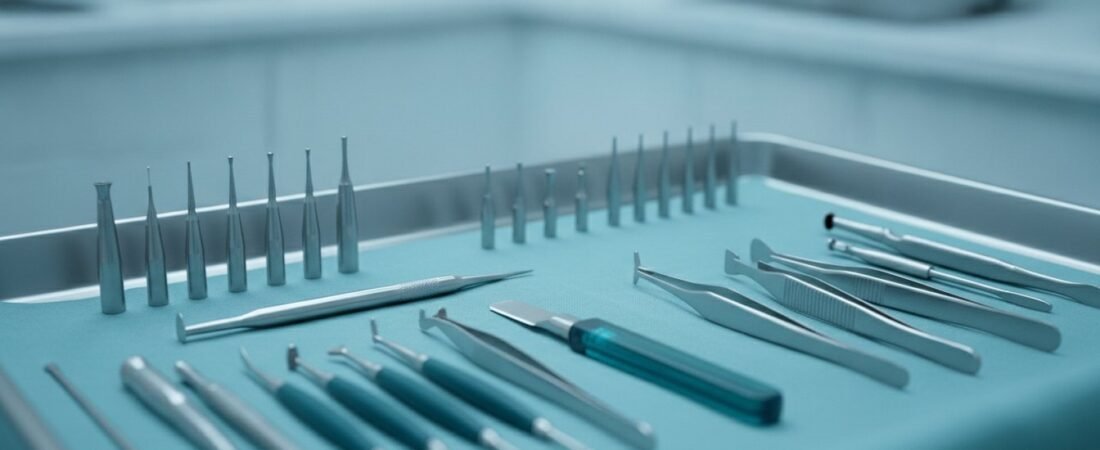
A single dull 0.6mm punch can compromise an entire follicular unit, turning a high-value procedure into a clinical failure before the graft even reaches the recipient site. You likely already know that the difference between superior density and a wasted donor area often comes down to the microscopic edge of your hardware. Sourcing reliable hair transplant clinic supplies has become increasingly complex as we move through 2026, especially with the recent implementation of the FDA’s Quality Management System Regulation (QMSR) and the continued rigor of ISO 13485:2016 standards.
It’s frustrating to deal with inconsistent supply chains for specialized tools like sapphire blades or to worry about the certification status of your instruments. This guide provides the technical and regulatory roadmap you need to master your procurement process and ensure every tool in your tray meets global medical standards. We’ll explore how to establish a stable supply of high-precision hardware, improve patient results through better instrument geometry, and leverage wholesale sourcing to reduce your operational costs while maintaining absolute clinical excellence.
Key Takeaways
- Understand the direct correlation between instrument metallurgy and graft survival rates to minimize transection during extraction.
- Differentiate between standard steel and sapphire blade technology to enhance incision precision and accelerate patient recovery.
- Navigate the 2026 regulatory landscape by verifying ISO 13485 certifications for all hair transplant clinic supplies.
- Leverage the logistical and technical advantages of sourcing professional-grade hardware from the Istanbul R&D hub. This region offers unparalleled access to wholesale economies of scale.
- Align technical hardware procurement with specialized clinical training to maximize the efficiency of your surgical team.
The Critical Role of Precision Supplies in Hair Restoration Success
Clinical excellence in hair restoration isn’t merely a byproduct of surgical skill. It’s the direct result of the synergy between technical expertise and the quality of the instruments used. High-performance hair transplant clinic supplies act as the primary barrier against high graft transection rates. Even the most experienced surgeon cannot compensate for a dull punch or a poorly calibrated micromotor. When an instrument fails to maintain its edge, the mechanical resistance increases, leading to follicular damage that is often invisible until the growth phase fails months later.
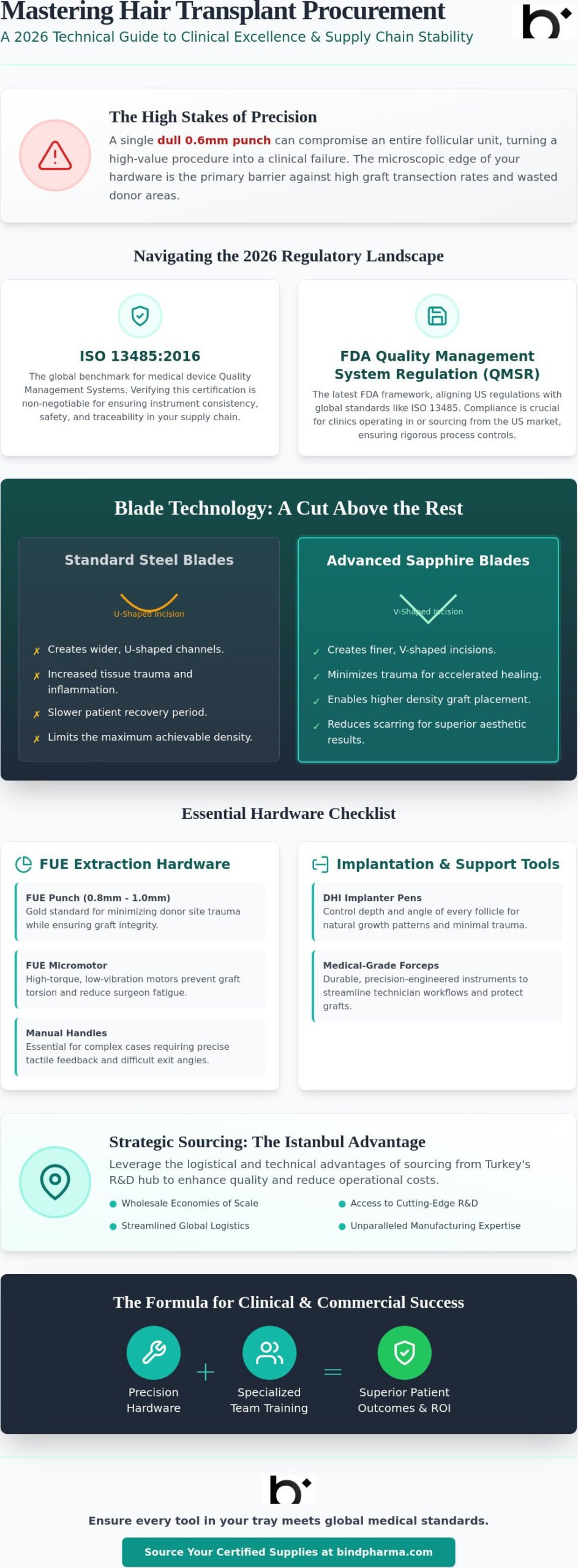
The industry has transitioned rapidly from rudimentary steel tools to advanced sapphire and gold-coated instruments. This evolution isn’t aesthetic; it’s functional. Sapphire blades allow for much finer, V-shaped incisions compared to the U-shaped channels created by steel. This precision directly impacts the density of the transplant and the speed of the healing process. Understanding modern hair transplantation techniques requires a deep dive into the hardware that makes these results possible. Furthermore, surgeon fatigue is a documented risk in high-volume environments. Tools that offer superior ergonomics and consistent sharpness reduce the physical force required for each extraction. This shortens the procedural duration, allowing the surgical team to maintain peak performance throughout the day.
Impact on Graft Survival and Patient Outcomes
Follicular unit integrity depends entirely on the sharpness and geometry of the FUE punch. A blunt edge creates heat and mechanical friction, leading to bulb damage or total transection. Precision-engineered hair transplant clinic supplies ensure that the punch glides through the tissue with minimal resistance, preserving the vital structures of the graft. Similarly, using ergonomic DHI implanter pens minimizes the human error factor during graft placement. By controlling the depth and angle of every follicle, these pens ensure a natural growth pattern while protecting the delicate tissue from physical trauma during the transition from the Petri dish to the scalp.
Operational Efficiency and Clinic ROI
Operational success requires a balance between medical excellence and fiscal discipline. When calculating the cost-per-procedure, clinics must evaluate the longevity of their medical-grade hardware. While cheap, non-certified tools may seem cost-effective initially, their rapid degradation leads to increased waste and potential revision surgeries. Investing in durable, high-performance instruments like sapphire blades and medical-grade forceps streamlines technician workflows. Standardized tool sets allow for faster setup times in the OR and more predictable results across different surgical teams. This consistency is what builds a clinic’s reputation and long-term profitability in a competitive global market.
Essential Hair Transplant Clinic Supplies: A Categorized Checklist
Maintaining a robust inventory of hair transplant clinic supplies ensures that your surgical team never compromises on technique due to hardware limitations. A clinic’s technical capacity is defined by its ability to match the right instrument to the patient’s specific hair characteristics. This requires a categorized approach to procurement, focusing on extraction, implantation, and post-procedural care. While the industry sees rapid innovation, including robotic systems that have received FDA clearance for surgical devices, the core of most successful operations remains the high-quality manual and motorized instruments used by skilled technicians.
FUE Extraction Hardware
The FUE punch is the most critical component of the extraction phase. Choosing between a 0.8mm and a 1.0mm punch isn’t just about the size of the graft; it’s about the patient’s skin laxity and follicle depth. A 0.8mm punch is often the gold standard for minimizing donor site trauma, but it requires a high-torque, low-vibration Fue Micromotor to prevent graft torsion. Motorized extraction offers speed, yet many surgeons still keep manual handles in their hair transplant clinic supplies for complex cases where tactile feedback is necessary to navigate difficult exit angles.
Advanced Implantation Technology
Choosing the right instruments for implantation depends on whether the clinic utilizes Sapphire FUE or Direct Hair Implantation (DHI). Sourcing genuine Sapphire Blades is vital for clinics performing channel opening. These blades must be inspected for microscopic imperfections that could cause tissue snagging. Conversely, DHI operations rely on the needle quality of the DHI Implanter Pen. The internal spring mechanism and the needle’s bevel angle determine how smoothly the graft is placed, which directly affects the final hairline density. Clinics aiming for peak efficiency often source their professional hair restoration instruments directly from specialized manufacturers to ensure batch consistency.
Graft handling also requires specialized surgical forceps designed for different stages of the process. Extraction forceps must have a delicate grip to avoid crushing the follicle, while placement forceps require a different tip geometry for precise insertion. Beyond the operating room, the checklist must include Post Transplant Hair Care solutions. Clinical-grade shampoos and recovery serums aren’t just retail items; they’re medical necessities that protect the clinic’s work during the vulnerable first 14 days of recovery. Standardizing these supplies across your facility creates a predictable environment where technicians can focus on precision rather than troubleshooting equipment failures. Clinics seeking to optimize this phase should review the 2026 clinical guide to post transplant hair care products to ensure their aftercare protocols meet current graft survival standards.
Evaluating Quality: Medical Grade Standards and ISO 13485
Sourcing hair transplant clinic supplies requires a technical evaluation that goes far beyond surface-level marketing claims. Procurement officers often face a market saturated with “surgical grade” labels that lack the regulatory backing required for high-stakes medical procedures. The danger of non-certified instruments lies in inconsistent metallurgy and poor sterilization resistance. Tools manufactured without a strict quality management system can harbor microscopic burrs or degrade after a single autoclave cycle, directly increasing the risk of patient infection or graft damage. True clinical excellence depends on instruments produced in environments where every variable is controlled and documented.
Why ISO 13485 is Non-Negotiable
ISO 13485:2016 is the definitive international standard for medical device quality management. As of February 2, 2026, the FDA’s Quality Management System Regulation (QMSR) has officially harmonized with this standard, making it the global benchmark for safety and efficacy. When you source hair transplant clinic supplies from an ISO-certified manufacturer, you’re investing in batch-to-batch consistency. This certification requires the manufacturer to maintain absolute traceability for every instrument. If a batch of FUE punches exhibits premature dulling, the manufacturer can trace the raw material back to its source. This level of risk management is essential for clinics that prioritize patient safety and operational reliability.
Metallurgy and Surface Treatments
Material science is the foundation of instrument performance. Gold-coated FUE punches are no longer a luxury; they’re a technical solution for reducing the friction coefficient during extraction. This coating minimizes heat generation, which is a primary cause of graft desiccation. Sapphire blades offer a similar leap in performance. Their unique molecular structure allows for an edge that is significantly sharper and more durable than traditional steel, enabling incisions that are precise to the micron. High-carbon medical-grade stainless steel with a Rockwell hardness (HRC) between 55 and 60 provides the necessary balance between edge retention and structural resilience for FUE punches.
Before finalizing any procurement contract, your team must verify manufacturer credentials through a rigorous checklist. Don’t just accept a PDF certificate; verify the ISO registration number through the appropriate accreditation body. Check for compliance with the EU Medical Device Regulation (MDR) if you’re operating within or sourcing from Europe. In Turkey, ensure all devices are registered in the Product Tracking System (ÜTS). A manufacturer’s willingness to provide technical data sheets for their metallurgy is a clear indicator of professional transparency and industrial discipline.
Strategic Sourcing: The Istanbul Advantage for Global Clinics
Istanbul has evolved into much more than a destination for medical tourism. It’s now the global R&D hub for hair restoration technology. The sheer density of clinical expertise in the city creates a unique feedback loop between surgeons and manufacturers. This proximity allows for rapid prototyping and the continuous refinement of hair transplant clinic supplies. While distributors in other regions often rely on generic surgical tools, Turkish manufacturers develop hardware specifically for the nuances of follicular unit extraction and implantation.
Istanbul as the Silicon Valley of Hair Restoration
The concentration of high-volume clinics in Turkey drives a level of innovation that’s difficult to replicate elsewhere. Manufacturers aren’t just selling tools; they’re solving clinical problems in real-time. As medical R&D increasingly relies on digital simulations and AI-driven design, many industry leaders explore Sale of high-performance GPU workstations and render nodes to power their most demanding computational workflows. Bind Pharma serves as a professional gateway to this medical ecosystem, ensuring that global partners receive instruments that meet rigorous international standards. By bypassing traditional retail networks, clinics can secure specialized hardware like sapphire blades and gold-coated punches at price points that reflect industrial efficiency rather than distributor markups.
Wholesale Procurement Logistics
Scaling a clinic’s operations requires a transition from reactive purchasing to strategic wholesale procurement. Bulk pricing tiers and minimum order quantities (MOQ) allow growing facilities to manage their overhead more effectively. In 2026, the logistics of exporting medical instruments from Turkey have become highly streamlined, with manufacturers managing the complexities of international shipping and customs. It’s vital to partner with suppliers who understand the regulatory requirements of your specific region, whether that involves FDA compliance or EU MDR standards. Before placing a bulk order, review our Sourcing FUE Punches Online: Quality Checklist to verify technical specifications.
The Turkish manufacturing model is built on economies of scale. Because the local demand for high-quality instruments is so high, production facilities can invest in advanced metallurgy and precision engineering while keeping unit costs low. This allows global clinics to maintain a high standard of care without the financial burden often associated with premium surgical hardware. If you’re looking to optimize your procurement strategy and secure a stable supply of ISO-certified hardware, view our wholesale hair restoration instruments to see how we support global clinic growth.
Beyond Hardware: Integrating Supplies with Training and Staffing
The procurement of professional hair transplant clinic supplies represents only the first phase of establishing a high-performance clinical environment. Even the most advanced titanium punches or sapphire blades cannot compensate for a lack of technical mastery. Bind Pharma recognizes that the synergy between hardware and human expertise is the ultimate determinant of graft survival rates. This holistic approach ensures that every instrument in your inventory is utilized to its full industrial potential, reducing waste and maximizing patient satisfaction through predictable surgical outcomes.
The Aesthetic Academy and Technician Excellence
The Aesthetic Academy plays a pivotal role in professionalizing global clinic operations by bridging the gap between instrument acquisition and surgical execution. The curriculum focuses on the technical nuances of modern hardware, such as the specific pressure required for DHI Implanter Pens and the unique incision geometry of sapphire blades. Technicians don’t just learn to use the tools; they learn to maintain them, ensuring the longevity of your hair transplant clinic supplies. Providing your staff with internationally recognized certifications serves as a powerful trust signal for patients, demonstrating a commitment to the highest standards of medical discipline and technical precision.
Staffing and Aftercare Integration
Expanding a clinic often leads to a dilution of quality if the staffing process is not managed with the same precision as the supply chain. Bind Pharma provides professional hair transplant teams to global clinics, allowing facilities to scale their operations without compromising on the technical excellence of their procedures. These teams are trained within the same ecosystem where the hardware is developed, ensuring a seamless integration between the technician and the tool. This eliminates the learning curve often associated with introducing new surgical instruments into a busy operating room, allowing for immediate operational efficiency.
Post-procedural success is equally dependent on the products used during the recovery phase. Post transplant hair care products, including clinical-grade shampoos and serums, are essential for protecting the newly implanted grafts during the critical first 14 days. Integrating these into your clinic’s workflow provides a dual benefit: it secures the surgical result and creates a sustainable revenue stream through specialized aftercare. To secure your facility’s future and operational efficiency, Partner with Bind Pharma for your complete clinic supply and staffing needs.
Securing Clinical Excellence Through Strategic Procurement
Mastering the procurement of hair transplant clinic supplies is no longer just about inventory management; it’s a strategic pillar of clinical success. The synergy between ISO 13485 certified hardware and advanced technician training defines the modern standard for graft survival and patient density. By leveraging the technical advantages of the Istanbul medical ecosystem, your clinic can access high-precision instruments that were once reserved for the industry’s most elite facilities. This transition from standard tools to medical-grade precision ensures that your surgical outcomes remain consistent while operational overhead remains sustainable.
Bind Pharma stands as a global leader in this specialized sector. As an ISO 13485 certified manufacturer, we provide wholesale distribution to over 50 countries and serve as the primary supplier to top-tier Istanbul clinics. Our commitment to industrial discipline and technical excellence ensures that your team has the reliable hardware they need to perform at their peak. It’s time to elevate your facility’s performance with instruments designed for the future of hair restoration. Explore Bind Pharma’s ISO-Certified Wholesale Catalog to secure your clinic’s competitive edge in 2026.
Frequently Asked Questions
What are the most essential supplies needed to start a hair transplant clinic?
A foundational inventory must include FUE punches, a high-torque micromotor, sapphire blades or DHI implanter pens, and specialized surgical forceps. These core hair transplant clinic supplies form the basis of a professional surgical tray. You’ll also need sterilized graft storage containers, magnification loupes, and post-operative care kits to ensure a complete and efficient clinical workflow from extraction to recovery.
Why should a clinic choose sapphire blades over traditional steel blades?
Sapphire blades are superior because of their microscopic sharpness and non-metallic surface, which reduces tissue trauma and the risk of allergic reactions. Unlike traditional steel, the molecular structure of sapphire allows for V-shaped incisions that are thinner and more precise. This geometry enables higher graft density and leads to significantly faster healing times for the patient due to reduced scalp inflammation.
How do I verify if a hair transplant tool manufacturer is ISO 13485 certified?
You can verify a manufacturer’s ISO 13485 certification by requesting their registration number and validating it through an accredited certification body’s database. Reputable manufacturers will provide a copy of their certificate upon request. It’s essential to check the expiration date and ensure the scope of the certification specifically covers the production of medical devices and surgical instruments used in your facility.
What is the ideal FUE punch size for a standard hair restoration procedure?
The ideal FUE punch size typically ranges between 0.8mm and 0.9mm for the majority of standard procedures. This range provides a balance between successful graft extraction and minimal donor site scarring. While 1.0mm punches might be used for exceptionally thick follicular units, smaller diameters like 0.75mm are increasingly common for refined hairline work where precision is the primary objective.
Can I buy DHI implanter pens in bulk for my clinic?
Yes, professional clinics can purchase DHI implanter pens in bulk to maintain procedural consistency and reduce per-unit costs. Sourcing these instruments directly from the manufacturer ensures that every pen in your inventory meets the same technical specifications. Bulk procurement also guarantees that your surgical teams always have access to sterilized, high-performance hardware during peak procedural periods without facing supply chain interruptions.
What post-transplant hair care products should I provide to my patients?
Essential post-transplant care includes clinical-grade pH-balanced shampoos, antibiotic ointments, and hydrating recovery serums designed to protect the graft site. Providing these products as part of a standardized recovery kit ensures that patients follow a consistent aftercare protocol. High-quality hair transplant clinic supplies like these are vital for preventing infection and maintaining the integrity of the newly transplanted follicles during the first 14 days.
How does sourcing supplies from Turkey compare to US or European manufacturers?
Sourcing from Turkey offers a distinct advantage in terms of cost-efficiency and specialized innovation because the region serves as a global hair restoration hub. Turkish manufacturers produce hardware that is more aligned with the latest FUE and DHI techniques compared to general surgical suppliers in the US or Europe. Because of the high volume of local procedures, these tools undergo continuous real-world testing and industrial refinement.
Is it better to use disposable or reusable FUE punches?
Disposable FUE punches are generally superior because they guarantee maximum sharpness for every procedure and eliminate the risk of cross-contamination. Reusable punches inevitably lose their edge over time, which increases the likelihood of graft transection and mechanical tissue damage. Using a fresh, medical-grade disposable punch ensures that the mechanical resistance remains at its lowest possible level throughout the entire extraction phase.